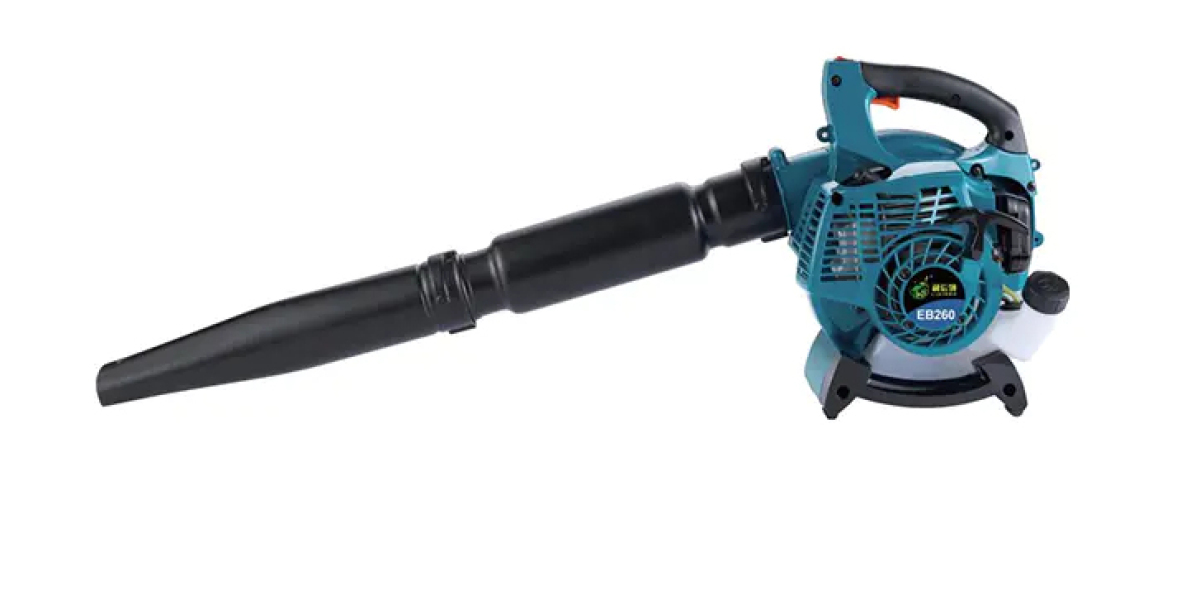

A Gasoline Handheld Blower is a practical outdoor tool designed for clearing leaves, dust, and lightweight debris from gardens, driveways, and work areas. It operates using a small gasoline engine that generates airflow strong enough to move scattered materials into manageable piles. The handheld structure allows users to carry and direct the airflow with ease.
The core of a Gasoline Handheld Blower is its engine system. Fuel is mixed with air inside the combustion chamber, where ignition produces energy that drives a fan. This fan pulls in air and forces it out through a narrow nozzle, creating a focused stream. The design balances power output with portability, allowing users to move freely while working.
Starting the machine usually involves a pull cord mechanism. Once the engine warms up, airflow becomes steady and consistent. Many models include throttle controls on the handle, enabling users to adjust airflow intensity depending on the task. Light debris may require lower settings, while wet leaves often need stronger airflow.
The nozzle shape plays an important role in performance. A narrow opening concentrates air pressure, increasing the ability to move heavier materials. Some designs include detachable nozzles that allow slight adjustments in direction and reach. This flexibility helps users clean different surfaces, from corners to open spaces.
Fuel efficiency is another consideration in Gasoline Handheld Blower design. Small engines are tuned to balance power and fuel consumption. Proper maintenance, such as cleaning air filters and checking fuel lines, helps maintain stable operation. Over time, this ensures smoother engine response during use.