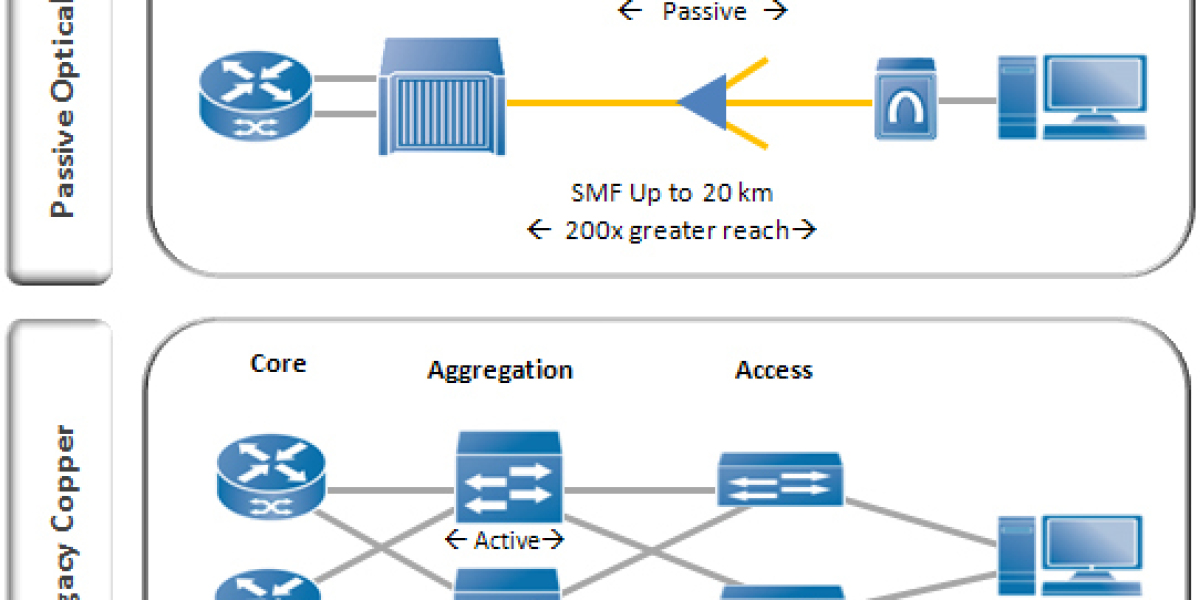

The Passive Optical LAN Market is currently undergoing a massive transformation as enterprises seek more efficient ways to handle the exploding volume of data within local area networks. Traditional copper-based Ethernet architectures are increasingly being viewed as legacy systems due to their high energy consumption, massive cabling footprints, and limited distance capabilities. In contrast, Passive Optical LAN (POL) utilizes single-mode fiber optic cable and passive splitters to deliver high-speed telecommunications to multiple end-users. This architecture mimics the fiber-to-the-home (FTTH) model but applies it to the indoor enterprise environment. By eliminating the need for active electronics like workgroup switches in every closet, organizations can significantly reduce their power requirements and cooling costs. The transition toward green building certifications and the demand for higher bandwidth to support 4K video, cloud computing, and IoT devices are major catalysts driving this shift. As businesses prioritize long-term infrastructure investments, the move toward fiber-based local networks is becoming a strategic necessity rather than a luxury.
From a strategic standpoint, the Passive Optical LAN Market analysis suggests that the technology offers unparalleled security and longevity. Fiber optics are inherently more secure than copper because they do not emit electromagnetic interference and are extremely difficult to tap without detection. Furthermore, while copper cables need to be replaced every few years to keep up with new standards like Cat6 or Cat7, a single-mode fiber infrastructure installed today can support bandwidth needs for decades to come simply by upgrading the terminal electronics. This "future-proof" nature makes it an attractive option for government agencies, large corporate campuses, and hospitality sectors where frequent renovations are costly. However, challenges remain, such as the initial learning curve for IT teams accustomed to traditional switching and the perceived high upfront costs of optical components. Despite these hurdles, the integration of Software-Defined Networking (SDN) with POL is streamlining management, allowing for centralized control of the entire network. As the ecosystem of manufacturers expands, we are seeing more competitive pricing and standardized deployment models that favor global adoption.
What are the primary cost benefits of switching to a Passive Optical LAN? The primary benefits include a reduction in capital expenditure due to less cabling and fewer active switches, as well as significantly lower operational costs through reduced energy consumption and cooling requirements.
Is Passive Optical LAN compatible with existing Wi-Fi technology? Yes, POL serves as a high-capacity backhaul for Wi-Fi access points, ensuring that the wireless network can operate at its maximum potential speed without the bottlenecks associated with traditional copper cabling.
➤➤➤Explore MRFR’s Related Ongoing Coverage In Semiconductor Industry:
Building Automation System Market