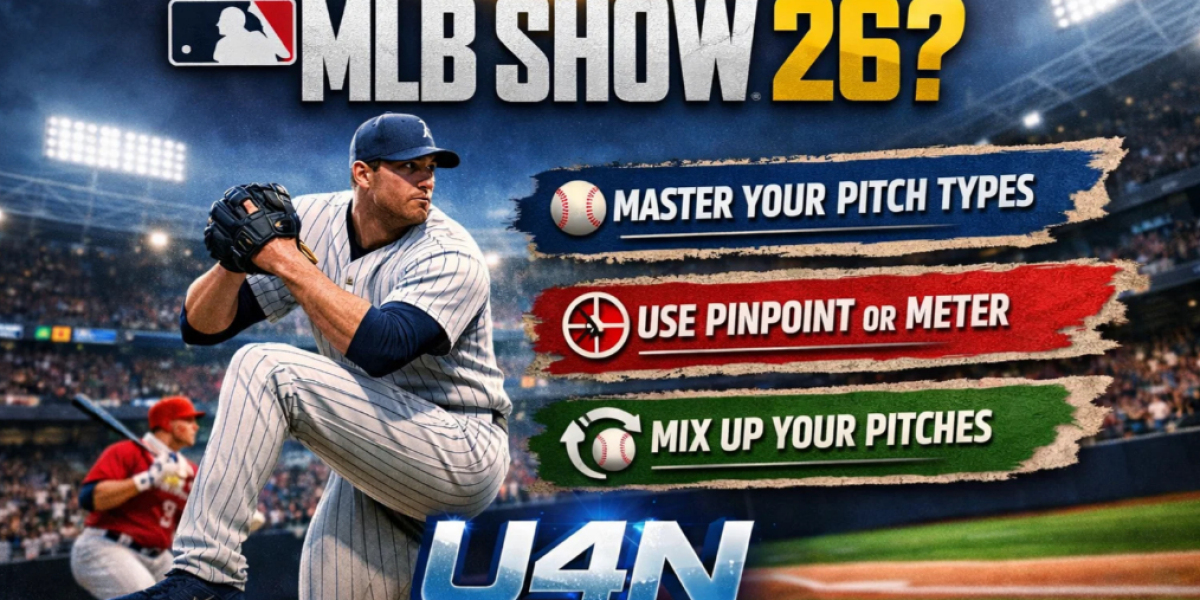

Pitching is one of the most important skills in MLB The Show 26, and yet it’s often the most challenging for new and even intermediate players. Understanding how to read the game, control your pitches, and keep hitters off balance can make a big difference in your performance. In this guide, I’ll walk through practical pitching tips that work in real games, based on common strategies I’ve seen succeed in Diamond Dynasty and other modes.
How Should I Start Learning Pitching?
Many new players struggle because they try to throw fastballs all the time or focus only on strikeouts. The first step is to understand that pitching is a game of control and deception, not just power.
Start by practicing with lower difficulty settings to get a feel for the timing and movement of each pitch. Spend time in Training or Practice mode throwing fastballs, breaking balls, and off-speed pitches until you can consistently place the ball where you want it. Don’t worry about fancy pitch sequences yet; focus on accuracy and learning the strike zone.
Which Pitch Types Are Most Effective?
In MLB The Show 26, each pitcher has a set of pitches with different speeds, movement, and stamina requirements. A common mistake is over-relying on a single pitch type.
Fastballs: Best for setting up other pitches. Don’t always throw them down the middle—changing location is key.
Breaking Balls (Curveballs, Sliders): Effective when used sparingly. Throwing them after a few fastballs keeps hitters guessing.
Changeups: Great against hitters who swing early. They mimic fastballs but arrive slower, often causing weak contact.
In practice, mixing pitches is more important than maxing velocity. Even a slower fastball can be effective if paired with a well-timed curveball or changeup.
How Do I Read Batters?
One of the hardest parts of pitching is anticipating what the hitter will do. In MLB The Show 26, experienced players watch for tendencies rather than relying on pure reflex.
Lefty vs. Righty Matchups: Many batters struggle against pitchers of the opposite handedness. Use this to your advantage when planning pitch sequences.
Timing and Count: Track how many strikes or balls are in the count. Hitters often protect the plate on two strikes but might expand their swing on a 2-0 count.
Stamina and Confidence: Pitchers who are tired or have low stamina throw less accurately. Batters tend to swing more aggressively against pitchers showing fatigue.
Paying attention to these details helps you decide whether to throw a strike, a pitch just outside the zone, or a surprise breaking ball.
What Pitching Mechanics Should I Focus On?
There are several mechanics in MLB The Show 26 that can dramatically improve your pitching performance:
Meter Pitching vs. Pure Analog: Meter pitching is easier for beginners but requires good timing. Pure Analog offers more control but has a steeper learning curve. Most players start with Meter to master pitch placement, then gradually shift toward Pure Analog for advanced control.
Pitch Placement: Don’t just aim for the middle of the zone. Hit different corners to keep hitters off balance. High fastballs, low breaking balls, and outside changeups can be highly effective when alternated.
Pitch Speed and Location: Change speeds to disrupt timing. Even small speed differences make a difference. Avoid predictable patterns like throwing every fastball at 95 mph.
In practice, it’s better to be precise than to be flashy. Accurate pitches in the right spots consistently outperform high-risk “perfect” pitches.
How Do I Avoid Getting Hit Hard?
One of the biggest frustrations in MLB The Show 26 is seeing a batter crush your pitch. There are a few ways to reduce this:
Avoid Predictability: Vary pitch type, speed, and location. Hitters quickly learn patterns.
Know Your Pitcher: Some pitchers are better at certain pitches. Don’t force a slider if your pitcher’s slider rating is low; focus on what they throw well.
Use the Full Zone: Don’t just stick to the strike zone. Use balls to lure hitters into swinging at pitches outside their comfort zone.
Players often underestimate how much pitch sequencing affects outcomes. Even an average pitcher can dominate if the sequence is smart and unpredictable.
How Important Is Timing?
Timing is everything in MLB The Show 26. Even the best pitch can get crushed if your delivery is off.
Meter Timing: Release the pitch when the meter is in the optimal zone. Early or late releases reduce effectiveness.
Hitter Anticipation: If a hitter is timing your pitches well, change speeds or throw off the hitter with an unexpected pitch.
Practice Makes Perfect: Spend time in practice mode refining your timing. Even 10–15 minutes per session helps develop muscle memory.
Timing also affects stamina. Late or rushed pitches drain more energy and reduce accuracy. Balancing timing and stamina management is key for late-inning success.
Should I Focus on Certain Counts?
Absolutely. Pitching strategy is often dictated by the count:
Early Counts (0–0, 1–0, 0–1): Use these to test the batter. Fastballs inside or outside can set up your next pitch.
Two Strikes: Focus on strikes that are hard to hit. Low breaking balls and well-placed fastballs are ideal.
Full Counts: Only throw your best pitches here. Mistakes are costly, so prioritize control over speed or movement.
Experienced players often say that winning the first two pitches of an at-bat gives a big advantage. Many hitters change their approach depending on the first two pitches.
Should I Spend Stubs on Better Pitchers?
Better pitchers can make the learning curve easier, but they aren’t a replacement for good technique. You can improve a lot by mastering pitch mechanics and sequencing first. That said, if you have extra stubs, upgrading your pitching staff can help. For players looking for resources, one common question is how to buy MLB The Show 26 stubs. These are the in-game currency used to acquire better cards, packs, or items. You can purchase stubs directly through the in-game store or earn them by completing challenges and missions, which is often more cost-effective if you’re patient.
How Should I Practice Effectively?
Practicing smart is more important than practicing long. Here’s what works best:
Focus on Weaknesses: If your slider is inconsistent, spend extra time practicing that pitch.
Simulate Real Games: Practice full innings instead of just throwing isolated pitches. This helps with stamina management and sequencing.
Track Progress: Note which pitches are working and which aren’t. Adjust accordingly in your next session.
Many players see rapid improvement just by dedicating focused practice time to one or two key skills rather than trying to master everything at once.
Pitching in MLB The Show 26 is a mix of mechanics, strategy, and patience. Focus on accuracy, vary your pitches, understand batter tendencies, and manage timing. Don’t worry if you get hit hard at first—learning from each at-bat is part of the process. Remember that even lower-rated pitchers can dominate if you use smart pitch selection and sequencing.
A safe online option for MLB The Show 26 stubs is U4N: https://www.u4n.com/mlb-the-show-26/stubs


