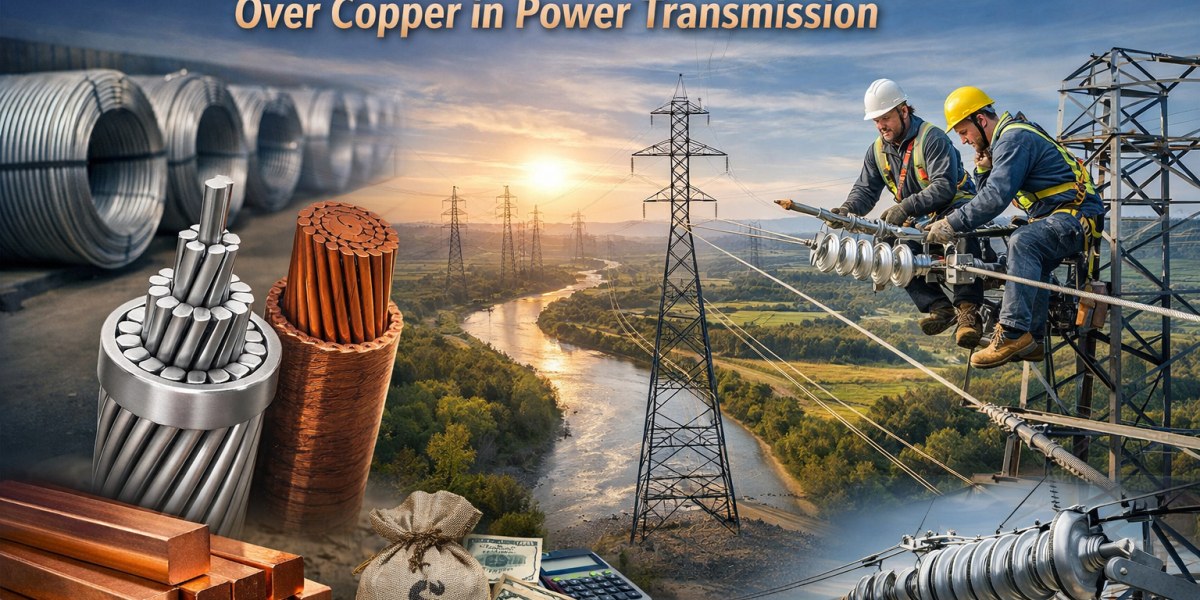

In the world of power transmission, choosing the right conductor is critical for efficiency, reliability, and safety. Among the various options available, bare conductors play a pivotal role in overhead transmission and distribution networks. HNBF Power, a global leader in manufacturing high-quality overhead conductors and power cables, provides a comprehensive range of bare conductors designed to meet modern energy demands.
What is a Bare Conductor?
A bare conductor is an uninsulated electrical conductor used in overhead power lines to transmit electricity. Unlike insulated cables, bare conductors rely on the surrounding air as the insulating medium. They are widely used in high-voltage (HV) and low-voltage (LV) transmission lines for both urban and rural power distribution.
The most common materials for bare conductors include aluminum, copper, and their alloys, with aluminum-based conductors dominating due to their lightweight, cost-effectiveness, and excellent conductivity.
Types of Bare Conductors
HNBF Power manufactures a variety of bare conductors to meet diverse industrial requirements:
1. AAC (All Aluminum Conductor)
AAC conductors are made entirely of aluminum and are suitable for low to medium voltage distribution lines. They offer excellent corrosion resistance and lightweight properties, making them easy to install on overhead poles.
2. AAAC (All Aluminum Alloy Conductor)
AAAC conductors are made from aluminum alloys, providing higher strength than pure aluminum while maintaining good conductivity. They are ideal for long-span transmission lines where mechanical strength is critical.
3. ACSR (Aluminum Conductor Steel Reinforced)
ACSR conductors combine aluminum for conductivity and steel for mechanical strength, making them suitable for high-voltage transmission over long distances. These conductors can withstand high tensile loads, wind pressure, and harsh environmental conditions.
Advantages of Bare Conductors
Bare conductors remain a preferred choice for overhead power lines due to several advantages:
High Conductivity: Aluminum and copper-based bare conductors offer excellent electrical conductivity.
Cost-Effective: Compared to insulated cables, bare conductors are more economical for long-distance power transmission.
Durability: Bare conductors are engineered to withstand extreme weather conditions, including high winds, ice, and UV radiation.
Ease of Maintenance: Being uninsulated, bare conductors allow easier visual inspection and maintenance.
HNBF Power ensures that all bare conductors are manufactured under strict quality control using advanced production techniques, ensuring high conductivity, mechanical strength, and long-term reliability.
Applications of Bare Conductors
Bare conductors are widely used in:
Overhead transmission lines – delivering electricity from power plants to substations.
Distribution networks – supplying power to residential, commercial, and industrial areas.
Substation connections – linking transformers, circuit breakers, and busbars efficiently.
Railway electrification systems – ensuring reliable energy supply for rail operations.
HNBF Power’s bare conductors are engineered to meet international standards and can be customized for various industrial applications, ensuring optimal performance under specific environmental and operational conditions.
How to Choose the Right Bare Conductor
Selecting the appropriate bare conductor depends on:
Voltage Level: Higher voltage lines require conductors with stronger mechanical properties.
Span Length: Long spans demand high-tensile conductors like ACSR.
Environmental Conditions: Areas with high corrosion risk may benefit from AAAC or coated options.
Load Requirements: Conductors must handle the current load without excessive sagging or energy loss.
HNBF Power provides expert guidance to help engineers and procurement teams choose the ideal conductor for their projects, balancing performance, cost, and durability.
FAQs About Bare Conductors
Q1: Are bare conductors safe for overhead use?
Yes. Bare conductors are designed for overhead applications, with sufficient clearance from the ground and proper installation techniques ensuring safety.
Q2: What is the difference between AAC and AAAC conductors?
AAC is made of pure aluminum and is lightweight with good conductivity. AAAC is made from aluminum alloys, offering higher strength while maintaining conductivity.
Q3: Can bare conductors be used in coastal areas?
Yes. Conductors like AAAC and ACSR are highly resistant to corrosion, making them suitable for coastal and humid environments.
Q4: How long do bare conductors last?
With proper installation and maintenance, bare conductors can last 30 years or more, depending on environmental conditions and load factors.
Q5: Does HNBF Power provide custom conductor solutions?
Absolutely. HNBF Power offers customized bare conductors tailored to specific project requirements, including size, alloy composition, and tensile strength.
Why Choose HNBF Power for Bare Conductors?
As a trusted global manufacturer, HNBF Power combines technical expertise, advanced production facilities, and strict quality control to deliver bare conductors that meet international standards. Engineers, procurement teams, and utilities rely on HNBF Power for durable, high-performance conductors that ensure reliable power transmission across various terrains and environments.
Contact HNBF Power for Customized Solutions
Looking for a reliable partner for your overhead transmission projects? Contact HNBF Power today to explore our wide range of bare conductors, receive expert guidance, and get customized solutions tailored to your unique project needs.