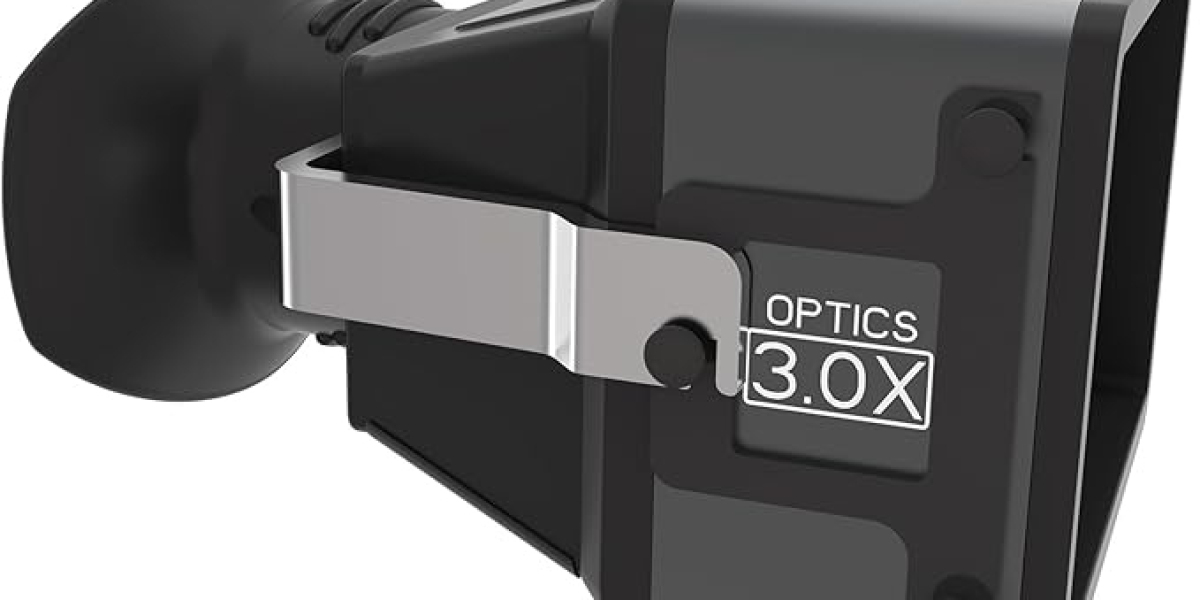

Photographers and videographers often struggle with electronic viewfinders (EVFs) that produce blurry images, low contrast, and eye fatigue during extended use. Many assume the problem lies in the sensor or display, but in reality, the optical path in the viewfinder is often the culprit.
Using a properly designed EVF optical module can drastically improve clarity, reduce eye strain, and deliver accurate framing and focus, making it an essential component in modern cameras.
Why Standard EVF Designs Cause Blurry Previews
Traditional EVF setups often use simple lenses that are not optimized for near-eye viewing. This can lead to:
Soft focus or blurred edges
Uneven brightness across the screen
Limited field of view (FOV)
Eye strain during prolonged usage
Reduced accuracy when framing or focusing
Even high-resolution displays cannot overcome these optical design limitations.
What Is an EVF Optical Module?
An EVF optical module is a compact assembly of lenses, prisms, and optical elements designed to project the display image directly into the user’s eye with high clarity and proper magnification.
This module ensures:
Sharp and uniform image across the entire viewfinder
Minimal light loss and maximum brightness
Corrected geometric distortion
Optimized eye relief for comfort
How It Enhances Camera Performance
Integrating a high-quality EVF optical module improves both usability and precision in photography and videography.
Clearer Focus and Framing
The optical path is designed to present the sensor’s image without blur or distortion, helping accurate focus adjustments.
Reduced Eye Fatigue
Optimized eye relief and brightness uniformity make it comfortable for long shooting sessions.
Accurate Color and Contrast
Better optics ensure the EVF image accurately represents the sensor output, aiding in exposure and color correction.
Expanded Field of View
A well-designed module allows photographers to see more of the scene without moving their eyes excessively.
Applications Beyond Traditional Cameras
EVF optical modules are not limited to DSLR or mirrorless cameras. They are widely used in:
Professional cinema cameras
High-end digital camcorders
AR/VR camera interfaces
Industrial inspection cameras
Compact drones with near-eye viewfinders
Any device that requires precise near-eye viewing benefits from a high-quality EVF optical module.
Optical Design for Maximum Efficiency
These modules are engineered to:
Minimize internal reflection and light loss
Correct image distortion from curved displays
Integrate compactly without adding weight
Maintain consistent performance across temperatures
Proper optical design ensures that high-resolution displays deliver their full potential to the user’s eye.
Why Some EVFs Still Underperform
Even with advanced displays, some EVFs remain unsatisfactory because of poor optical design. Simple lens assemblies cannot handle the magnification, eye relief, and field-of-view requirements simultaneously.
Investing in a quality EVF optical module resolves these limitations and enhances the overall camera experience.
Conclusion
The EVF is the photographer’s window into the scene. Without precise optics, even the best displays cannot provide accurate framing, focus, or color. A well-designed EVF optical module ensures clarity, comfort, and confidence in every shot, making it a critical component in modern imaging systems.