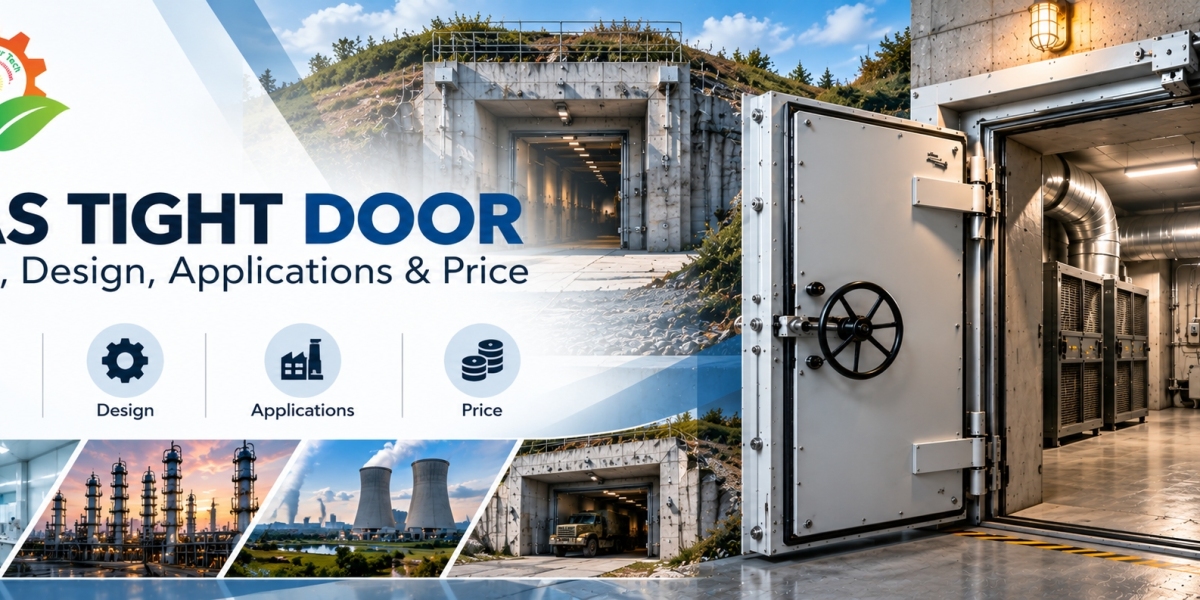

Designed to prevent the passage of hazardous gases, airborne contaminants, and radioactive particles, gas tight doors are used across industries that depend on pressure-controlled environments. Their application extends far beyond defense infrastructure, serving critical roles in research laboratories, chemical plants, pharmaceutical facilities, nuclear installations, and other hazardous environments.
What Is a Gas Tight Door?
A Gas tight door is a specially engineered airtight barrier designed to isolate protected spaces from hazardous external environments. Unlike conventional industrial doors, it incorporates reinforced steel construction, precision-manufactured frames, compression gasket seals, and multi-point locking mechanisms that work together to create a reliable airtight seal.
The primary purpose of a gas tight door is to maintain controlled pressure conditions while preventing the leakage of toxic gases, biological agents, radioactive particles, and other airborne contaminants.
Gas Tight Door Design for Pressure-Controlled Facilities
An effective Gas tight door design supports facilities operating under either positive or negative pressure.
For example, a Gas tight door for CBRN shelters helps maintain positive internal pressure, ensuring contaminated air cannot enter the protected area. Biological containment laboratories often operate with negative pressure to prevent hazardous agents from escaping into surrounding spaces.
Maintaining these pressure differentials requires precision engineering, reliable gasket compression, and structurally stable door assemblies.
Where Are Gas Tight Doors Commonly Used?
Gas tight doors are installed wherever environmental isolation is essential for protecting people, equipment, or sensitive processes.
CBRN Shelters and Civil Defense Bunkers
One of the most critical applications is in CBRN shelters designed to protect occupants during chemical, biological, radiological, or nuclear emergencies.
These shelters rely on airtight doors to preserve positive internal pressure while supporting advanced filtration systems that remove hazardous airborne contaminants.
Military Command Centers
Military facilities often require controlled environments capable of remaining operational during hazardous incidents.
Gas tight doors help protect communication centers, command facilities, and underground bunkers from external contamination while maintaining secure environmental conditions.
Biological Containment Laboratories
Research laboratories handling infectious microorganisms require strict environmental isolation.
Gas tight doors support biosafety operations by maintaining pressure-controlled laboratory environments and preventing accidental release of hazardous biological agents.
Pharmaceutical and Chemical Research Facilities
Sensitive manufacturing and research environments often require contamination control to protect both personnel and products.
Gas tight doors help maintain clean, controlled environments where airborne contaminants must remain isolated.
Chemical and Petrochemical Plants
Industrial facilities handling toxic gases or hazardous chemicals frequently use airtight barriers to isolate process areas and improve personnel safety during routine operations or emergency situations.
Nuclear Facilities
Nuclear power plants, research reactors, and radioactive material handling facilities depend on airtight compartmentation to prevent the movement of hazardous airborne particles between operational zones.
Underground Infrastructure
Critical underground installations, including emergency shelters, transportation tunnels, and strategic infrastructure, often incorporate gas tight doors to enhance environmental protection and emergency preparedness.
Hazardous Material Storage Units
Facilities storing dangerous chemicals or hazardous materials use airtight barriers to reduce contamination risks and improve operational safety.
An Airtight door for hazardous facilities provides dependable isolation wherever hazardous airborne substances require controlled containment.
Engineering Features That Support Critical Applications
The demanding environments where gas tight doors operate require specialized engineering.
Important features include:
Continuous airtight sealing performance
Reinforced structural construction
Corrosion-resistant materials
Pressure differential capability
Security-grade locking mechanisms
Durable compression gasket technology
Low maintenance requirements
Compatibility with blast and fire protection systems
Compliance with recognized certification standards
These characteristics ensure reliable performance across a wide range of industrial and defense applications.
Integration with Critical Safety Systems
Modern Gas tight door systems are rarely installed as standalone components.
Instead, they are integrated with:
Blast-resistant structures
Fire-rated compartmentation systems
CBRN filtration units
HVAC pressure-control systems
Electronic access control
Emergency ventilation systems
Proper integration ensures that each protective system supports the overall safety strategy of the facility.
Sealing Performance and Maintenance
Long-term airtight performance depends on both engineering quality and routine maintenance.
Regular inspection should include:
Compression gasket condition
Locking mechanism alignment
Frame anchoring integrity
Corrosion protection
Leakage-rate verification
Lubrication of moving components
Preventive maintenance helps maintain sealing performance while extending the operational life of the installation.
Cost and Investment Considerations
The Gas tight door price depends on several engineering factors rather than standard manufacturing dimensions.
Project costs are influenced by:
Required sealing and leakage-rate class
Door dimensions and configuration
Steel grade and plate thickness
Frame engineering and anchoring design
Pressure testing and certification
Integration with filtration and pressure systems
Automation and locking hardware
Installation complexity
Site-specific engineering requirements
Long-term maintenance planning
Considering total lifecycle value instead of initial purchase price leads to more reliable long-term performance.
Buyer's Guide: Selecting the Right Manufacturer
Choosing an experienced manufacturer is essential for achieving dependable airtight protection.
When evaluating Gas tight door manufacturers in India, consider whether they provide:
Proven experience in critical infrastructure
Engineering and testing expertise
Compliance with IS/BIS and international CBRN or airtightness standards
Precision manufacturing capability
Custom engineering solutions
Comprehensive technical documentation
Professional installation support
Reliable after-sales maintenance
A demonstrated project track record
Many organizations choose a Sigma Power Tech manufacturer and service provider because integrated engineering, manufacturing, installation, and lifecycle support simplify complex infrastructure projects. The Sigma Power Tech gas tight door is often specified where customized airtight protection, certified performance, and long-term reliability are essential.
Common Mistakes to Avoid
Several procurement and installation decisions can reduce the effectiveness of a gas tight door.
Avoid:
Selecting a door based only on price
Ignoring project-specific pressure and leakage requirements
Incorrect frame-to-wall integration
Underestimating corrosion or fire exposure
Skipping certification verification
Neglecting long-term seal maintenance
Overlooking compatibility with filtration and CBRN systems
Addressing these issues during the planning stage improves both safety and lifecycle performance.
Conclusion
A Gas tight door is used wherever airtight containment is essential to protect people, critical processes, and sensitive infrastructure. From CBRN shelters and military facilities to pharmaceutical laboratories, chemical plants, and nuclear installations, these doors play a vital role in maintaining pressure-controlled environments and preventing hazardous contamination. Selecting the correct sealing class, certified engineering, proper installation, and regular maintenance provides far greater long-term value than focusing solely on upfront costs. In critical environments, dependable airtight performance remains a fundamental requirement for operational safety and resilience.