
Brazil’s air-conditioning landscape is being reshaped by persistent warming, recurring heatwaves, urbanization, and changing expectations around energy efficiency. Cooling is becoming increasingly important across households, offices, retail spaces, hospitality, healthcare facilities, and data centers, while manufacturers are incorporating connected controls and artificial intelligence into equipment to address both comfort and electricity-management needs.
According to the Brazil air conditioners market analysis published by Markntel Advisor, the sector was valued at around USD 4.25 billion in 2025 and is projected to reach USD 6.42 billion by 2032, expanding at a CAGR of 6.07% during 2026–2032. Split ACs accounted for around 48% of the sector in 2025, while authorized dealers and distributors represented approximately 68% of the distribution landscape.
Persistent Heat Is Strengthening Cooling Requirements
Temperature conditions are becoming an important structural factor behind cooling demand in Brazil. Data from Brazil’s Instituto Nacional de Meteorologia (INMET) shows that 2025 was the seventh-warmest year recorded in the country since 1961, with an average temperature of 24.56°C, or 0.33°C above the historical average. The result followed 2024, which remains Brazil’s warmest year in the historical series.
Heat exposure is also extending beyond isolated peak events. The industry analysis notes that summer 2024–2025 was the sixth-hottest summer on record, with above-average temperatures across several regions. Rio de Janeiro also experienced temperatures reaching 44°C in February 2025, illustrating how extreme heat can create sudden increases in cooling requirements.
Such conditions can extend the annual operating period of air-conditioning equipment. As households and businesses face more frequent periods of elevated temperatures, cooling systems can increasingly be treated as essential infrastructure rather than occasional appliances.
Split ACs Continue to Lead Product Demand
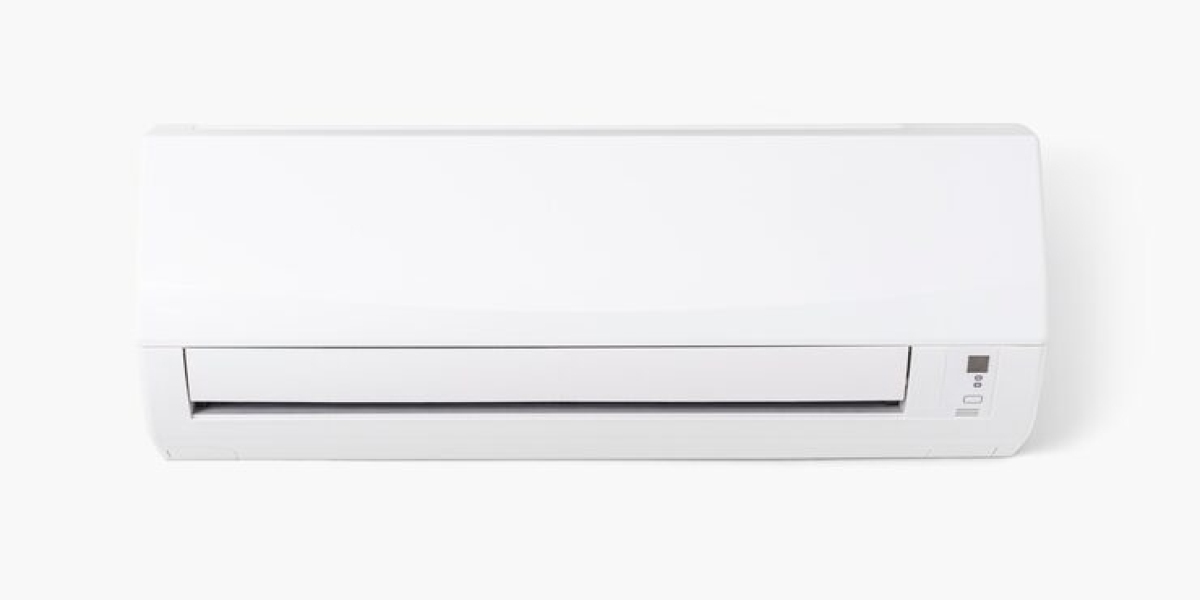
Split air conditioners represented around 48% of Brazil’s sector in 2025, making them the leading product category. Their suitability for residential and light-commercial applications supports broad adoption, particularly in apartments and compact urban buildings.
The category also benefits from a wide range of capacity options. Smaller units can serve individual rooms, while larger systems can accommodate offices and other spaces with higher cooling requirements. Lower operating noise, flexible indoor-outdoor installation, and the increasing availability of inverter technology further support their relevance.
Energy performance is becoming more important as electricity costs influence household and business operating expenses. Inverter-based systems can adjust compressor operation according to cooling requirements, helping avoid the repeated full-power cycling associated with conventional fixed-speed systems.
Smart Features Are Becoming Part of the Cooling Equation
Digitalization is creating another layer of change in Brazil’s air-conditioning landscape. Consumers are increasingly encountering systems equipped with Wi-Fi connectivity, remote operation, usage monitoring, voice control, and automated temperature management.
Recent product developments illustrate this direction. The industry analysis highlights the introduction of AI-enabled systems in Brazil that can learn usage patterns, adjust airflow, monitor energy consumption, and connect with smartphone-based platforms.
The trend is relevant beyond consumer convenience. The International Energy Agency has identified a strong relationship between heatwaves, air-conditioner use, and electricity demand. Its analysis found that in Brazil, a 1°C increase in temperature can contribute to an additional 3.6 GW of peak electricity demand.
This relationship makes efficiency-oriented cooling technologies increasingly relevant to both consumers and the wider electricity system.
Residential Cooling Remains the Largest End-User Segment
Residential applications represented around 24% of Brazil’s sector in 2025, making households the largest end-user category. Rising temperatures, urban housing patterns, and evolving expectations around indoor comfort are supporting demand.
The replacement cycle is also becoming more important. Households with older systems may consider newer equipment that combines improved cooling performance with inverter technology, connected controls, and more efficient operation.
At the same time, commercial and specialized applications are creating additional opportunities. Data centers are projected to be the fastest-growing end-user segment, with a CAGR of 12.19% during 2026–2032. The expansion of digital infrastructure is increasing the need for reliable environmental control because server equipment generates substantial heat and requires consistent operating conditions.
Online Sales Are Expanding Alongside Traditional Distribution
Authorized dealers and distributors accounted for approximately 68% of distribution in 2025. Their position reflects the importance of professional installation, product selection, maintenance, and after-sales service in air-conditioning purchases.
However, online sales are developing at a faster pace. The industry analysis projects online distribution to expand at an 8.19% CAGR during 2026–2032. E-commerce platforms can broaden product availability while allowing consumers to compare specifications, cooling capacities, energy characteristics, and prices before purchase.
This creates a hybrid distribution environment in which physical channels remain important for installation and service, while digital platforms increasingly influence product discovery and comparison.
Grid Reliability Could Become a Constraint
Growing cooling demand also creates pressure on Brazil’s electricity infrastructure. During periods of extreme heat, simultaneous operation of residential and commercial air conditioners can contribute to higher peak electricity requirements.
The IEA has highlighted this broader relationship between heat and electricity systems, noting that cooling demand can place significant stress on grids during heatwaves.
For Brazil, this makes energy efficiency increasingly relevant to the long-term development of cooling infrastructure. More efficient equipment can help moderate electricity consumption while providing the cooling performance required during hotter periods.
The Sector Is Moving Toward Connected Efficiency
Brazil’s air-conditioning landscape is evolving through the interaction of climate pressure, technology adoption, and changing consumer requirements. Split ACs are likely to remain central because of their broad applicability, while smart controls, inverter technology, and AI-enabled features are adding new dimensions to product development.
The growth of data centers and online distribution also demonstrates that demand is expanding beyond traditional household applications. At the same time, electricity-system constraints underline the importance of balancing greater cooling access with efficient equipment and responsible energy use.
The emerging direction is therefore not simply toward more air conditioners, but toward cooling systems that can deliver comfort with greater control, connectivity, and energy awareness.