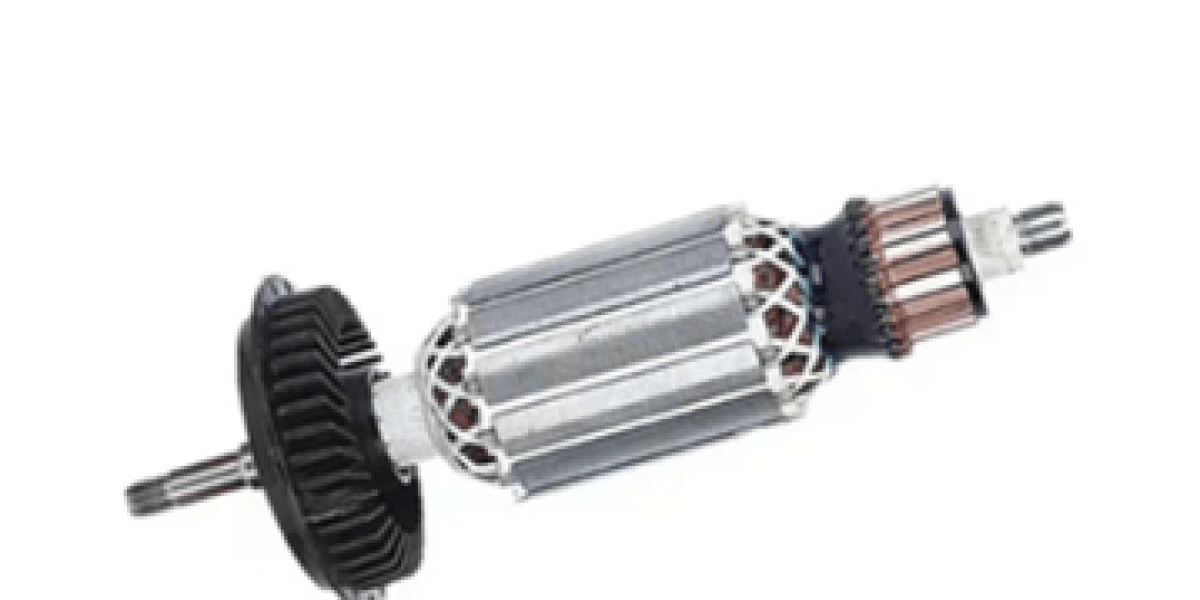

In most discussions about power tools, attention usually goes to the rotating parts of the motor, especially the rotor. However, the stationary component is just as important. The stator for power tools is the fixed part of the motor that generates the magnetic field required to make rotation possible. Without it, the rotor cannot function, and the tool would not produce usable mechanical power.
Inside a brushed motor, the stator for power tools is constructed from laminated steel cores wrapped with copper windings. When electrical current passes through these windings, an electromagnetic field is created. This field interacts with the rotor, producing the force needed for spinning motion. Although the stator does not move, it is the foundation of energy conversion inside the motor system.
The internal structure of the stator for power tools includes tightly arranged copper coils, insulation layers, and a rigid mounting frame that keeps everything in position. Stability is critical because even slight movement can disrupt magnetic alignment and reduce motor efficiency. A properly secured stator ensures consistent power output during heavy-duty tool operation.
Heat management is another important factor. As current flows through the copper windings, heat naturally builds up. The stator for power tools relies on insulation materials to prevent electrical short circuits and maintain performance stability. Over time, repeated heating cycles can degrade insulation, leading to reduced efficiency and higher operating temperatures.
In practical use, the stator for power tools works together with the rotor to convert electrical energy into mechanical motion. The rotor spins inside the stationary magnetic field created by the stator, allowing tools such as drills, grinders, and saws to perform cutting, shaping, and finishing tasks. If the stator weakens or becomes uneven, overall motor performance declines even if other components remain functional.
Although often overlooked, the stator for power tools remains one of the most essential elements in motor design, quietly enabling stable and continuous operation in everyday power tools.