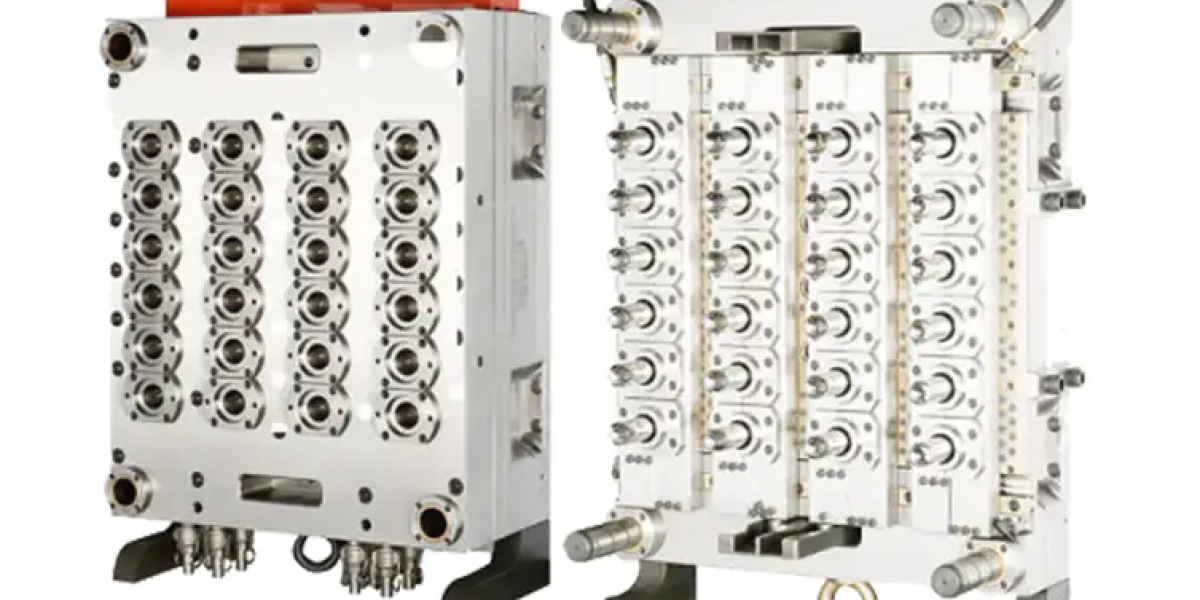

Preform wall thickness distribution is a water preform mould output characteristic that directly governs material consumption and bottle performance. Evenly distributed walls in a preform mean that the stretch blow moulding process can expand the material uniformly into the bottle shape, producing consistent sidewall thickness, base strength, and top-load performance. Uneven wall distribution — often originating from water preform mould imbalances in filling, cooling, or core alignment — creates bottles with thin sections that fail under filling line pressures or transport stacking loads.
Gate design in a water preform mould influences the preform's base zone quality significantly. The gate point — where resin enters the cavity — experiences concentrated shear heating and flow stress that can create localized crystallization, stress whitening, or gate splay defects if geometry and processing conditions aren't carefully matched. Hot tip gate designs in valve-gated water preform mould hot runner systems produce clean gate vestige and reduce base stress, improving the clarity and structural consistency of the preform base zone that becomes the bottle's base after blowing.
Matching preform design to the target bottle specification requires careful collaborative engineering between the bottle designer, the blow moulding process engineer, and the water preform mould toolmaker. Preform length, wall thickness, neck finish weight distribution, and base geometry all influence how the PET material stretches and orients during blow moulding. A preform geometry that seems dimensionally correct in isolation may produce inconsistent bottles if the material distribution doesn't match the specific blow mould cavity it will expand into. Prototyping and process validation before committing to full production water preform mould tooling investment catches these mismatches at a stage where corrections remain manageable.